Coffee Break is a 90-second spy film about one recruiter, backed by an entire AI recruitment team. I made it in one day with Claude Code running Opus 5.5, and Higgsfield. No camera, no crew, no actors. Here is exactly how, in five steps.
For a couple of months I kept asking myself one thing.
How do I really show what MetaDay does? Not explain it. Show it.
This film is my best try. I wanted you to feel what I feel when I watch the AI team work: one recruiter, and a whole squad moving behind her.
I'm not a filmmaker. I wrote the story, made every creative call and approved every frame. AI did the execution: it turned my story into scripts, then made the pictures, the clips and the edit.
One day, from brief to final cut. About $140 of tool costs allocated to this film.
First, what MetaDay does.
MetaDay is the AI recruitment team behind your one recruiter. It finds candidates, reaches out, sells the role, runs the first interviews and books the final ones. Your team sets the direction and makes the decisions.
Coffee Break shows what that looks like. This page shows how I made it, so you can make something like it for your own business.
The recipe.
Why "$50,000-looking"?
It's a comparison, not a valuation. Shot the traditional way, Coffee Break would need a writer, storyboards, a director and crew, ten actors, a London café, a command centre set and street scenes in four cities, then editing, voiceover and sound.
Published price guides put a professionally produced regional commercial at $15,000 to $50,000, and a national-standard one from $50,000 upwards. Each extra location adds roughly 40 to 60% to the budget (Vidico, 2026; Moonb, 2026).
Most of those figures are for 30 seconds in one or two places. Ours runs 90 seconds across four cities. So $50,000 is a fair, conservative comparison for a film of this ambition. These are production-company estimates, not a quote, and real budgets vary widely.
The secret is not the AI. It's the order. You spend nothing until you've seen the whole film on paper.
Every step ends with the prompt I'd use. One prompt is never enough: run it, read the answer, ask again. And each step's answer is the next step's input.
I started with a brief, not a prompt. One recruiter, one laptop, one coffee break, one voice note.
I told Claude the story in my head, by voice, in as much detail as I could. In one morning we shaped it into the final story: a London recruiter, four roles in four cities, by Monday. One voice note to the AI squad, Ryan, Scout, Mia and Niko, does the work. She ends the day with her coffee.
You're my script partner. First I'll tell you my story by voice, in as much detail as I can: who, where, what happens, how it ends.
My brief:
- Who it's for: [your customer]
- The one feeling: [e.g. relief]
- The last line: [your line]
Turn my story into 3 versions of a 60 to 90 second script. Keep my story and my words. One hero, one problem, one payoff. One line per scene. Don't add characters I didn't ask for.
Before any video, I made the whole cast as still images on Higgsfield's free image mode. Stills are cheap. Video is not.
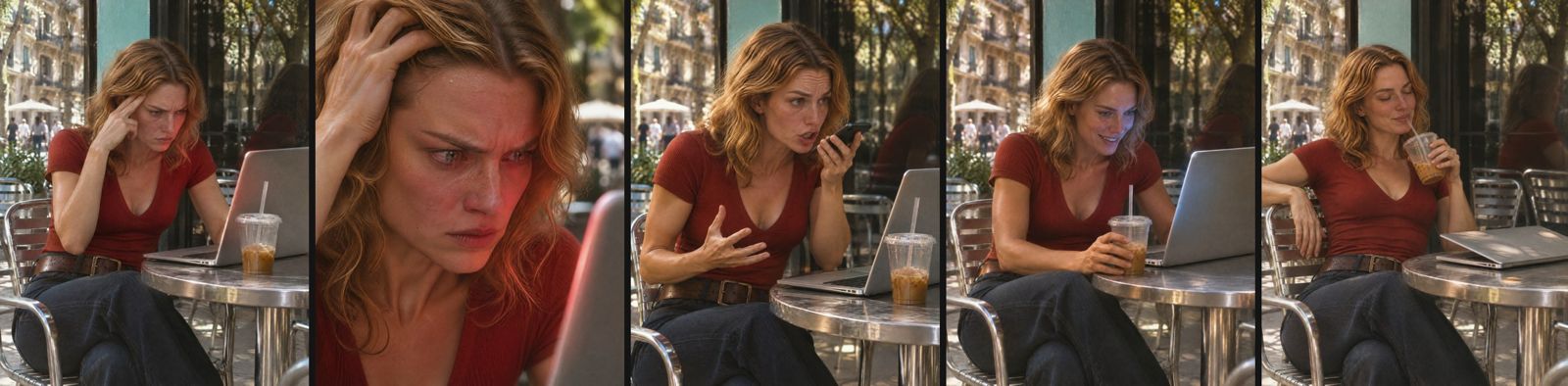
The first set. The recruiter in a red top, at a London café.
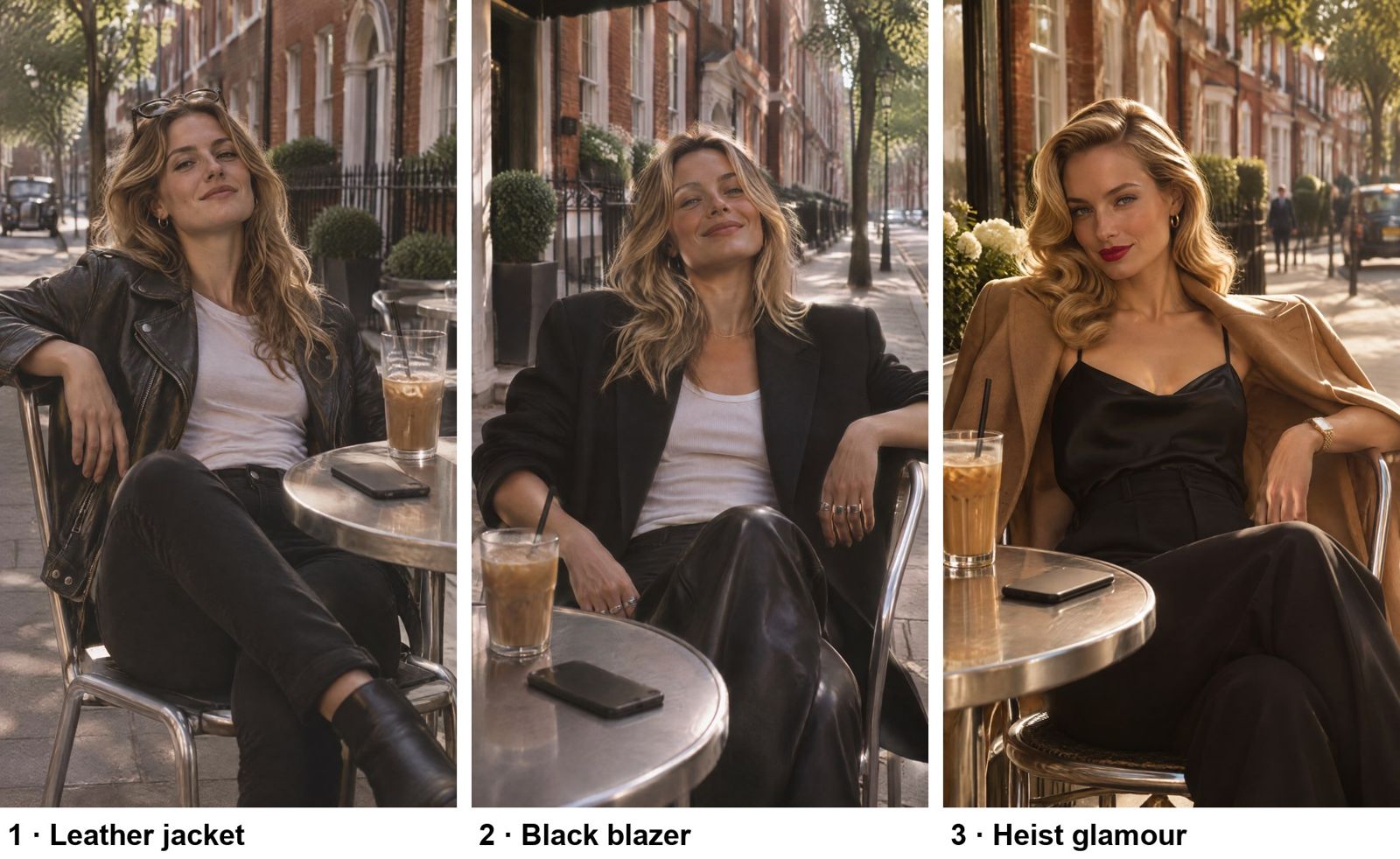
More characters. I created a few more recruiters, each with her own style, and put them side by side. The AI suggested more looks too. Some were funnier than others. Then my creative team (my daughter) decided on the hero.
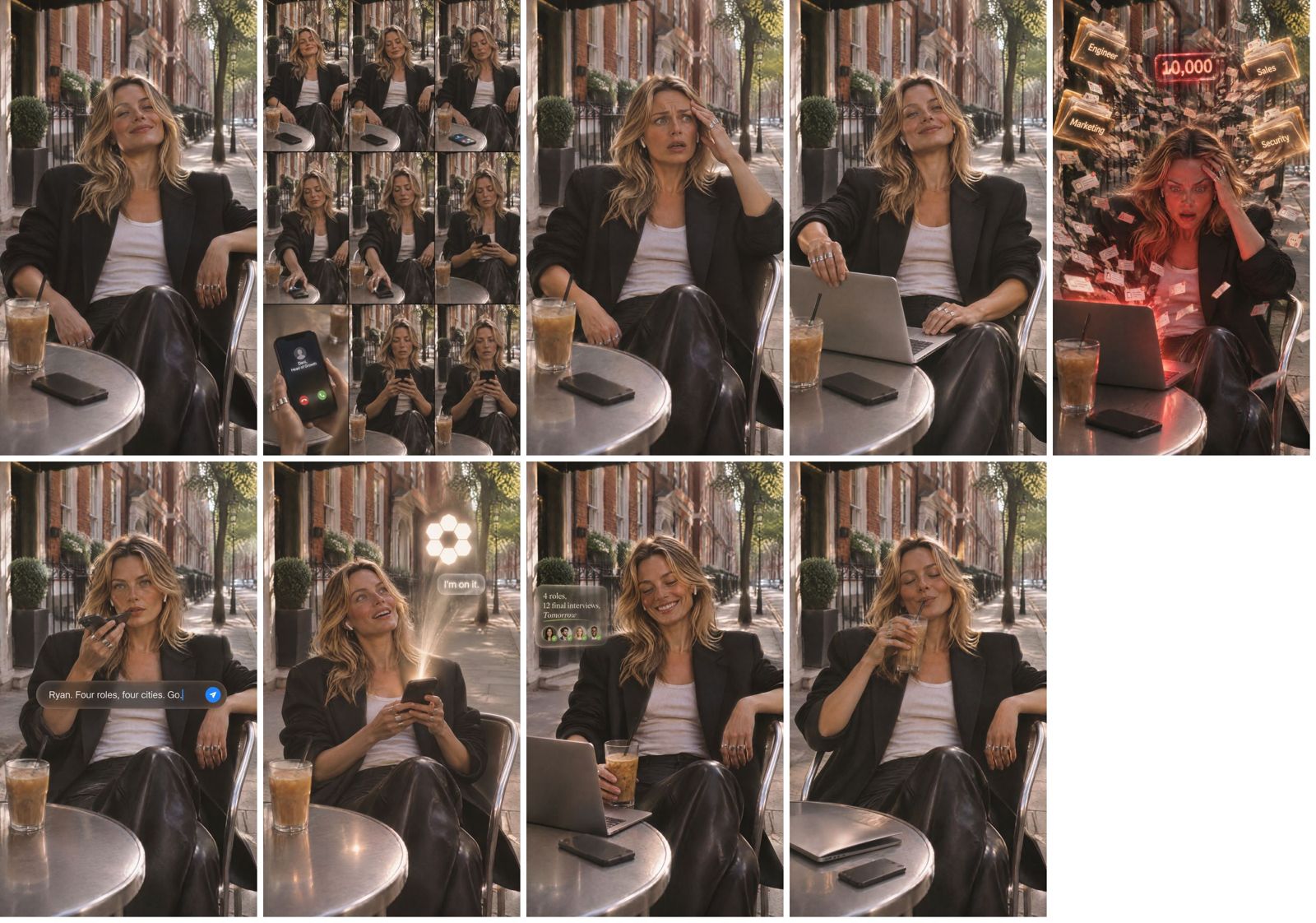
The second set. Then I made every one of her shots with that character.
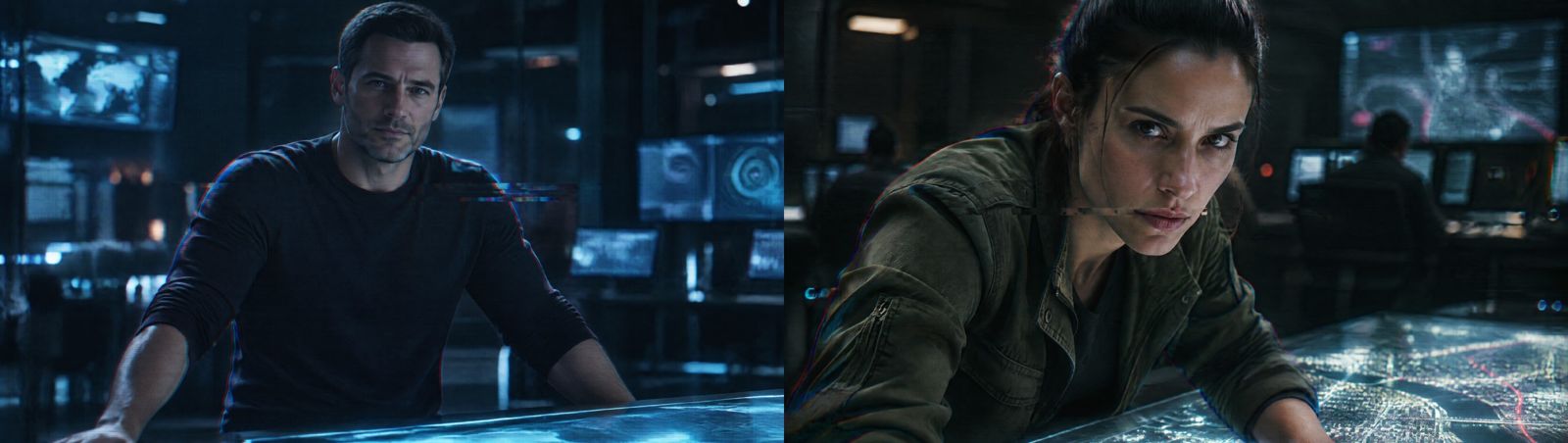
The agents. Ryan and Scout got their own look too.
Here's my final story: [paste it].
List every character and every scene. For each one, write an image prompt: face, age, outfit, place, light, camera angle. Same outfit in every scene. 16:9.
Get the remaining three steps, including the production workflow, tools, costs and lessons learned.
Follow Roi on LinkedIn for what we learn building MetaDay.
I made two presentations, because the story changed in the middle.
Presentation 1: the first plan. A picture board of 18 frames for a 41-second film, every shot in order with its timing. You can watch the film in your head in one minute.
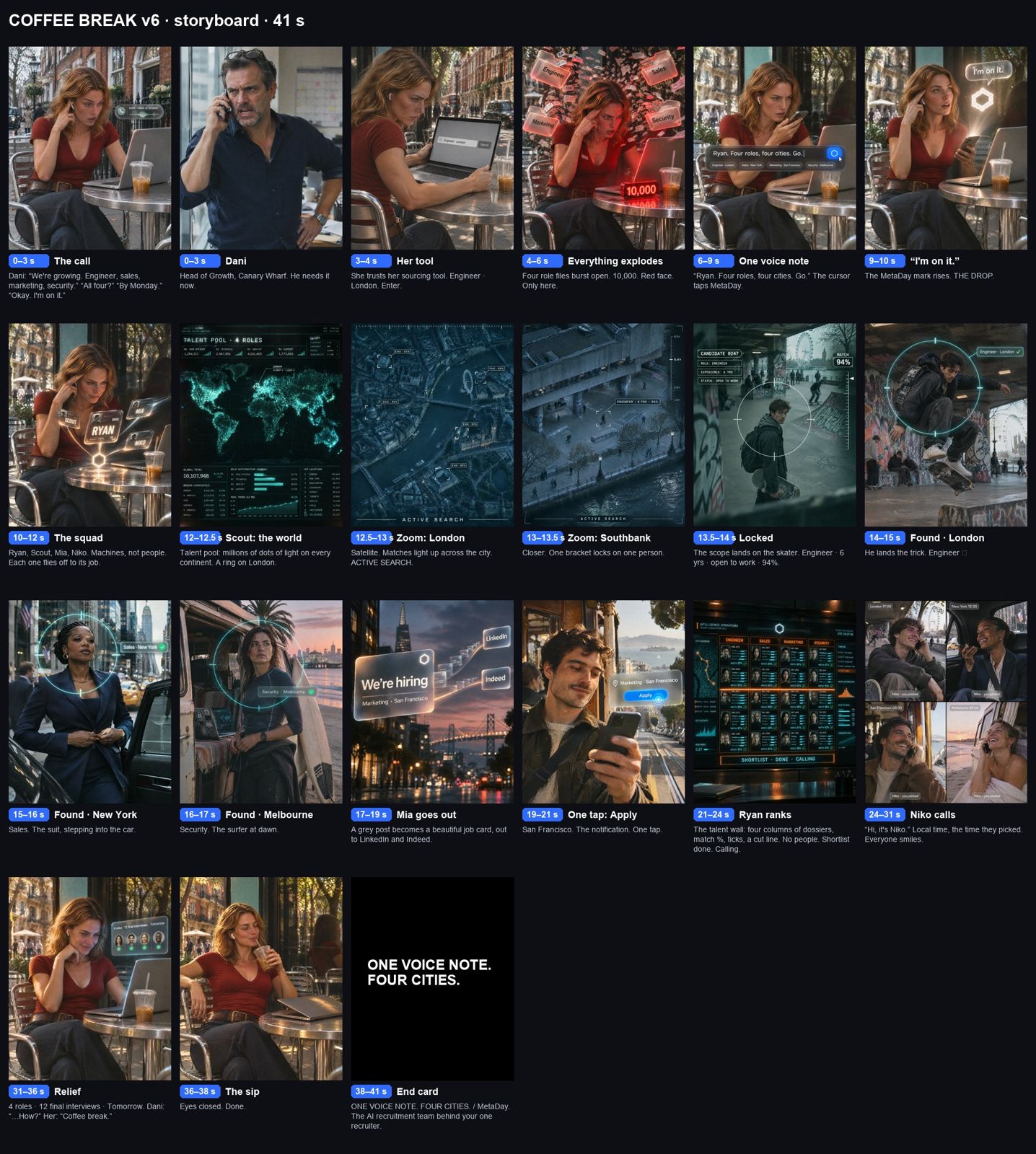
Presentation 2: the whole story. Once I saw the board, the story needed more room: the squad, four cities, the payoff. So the second presentation grew to 13 pages. The idea, the rules, the squad, the tone. Then every beat with the picture, the words and the sound.
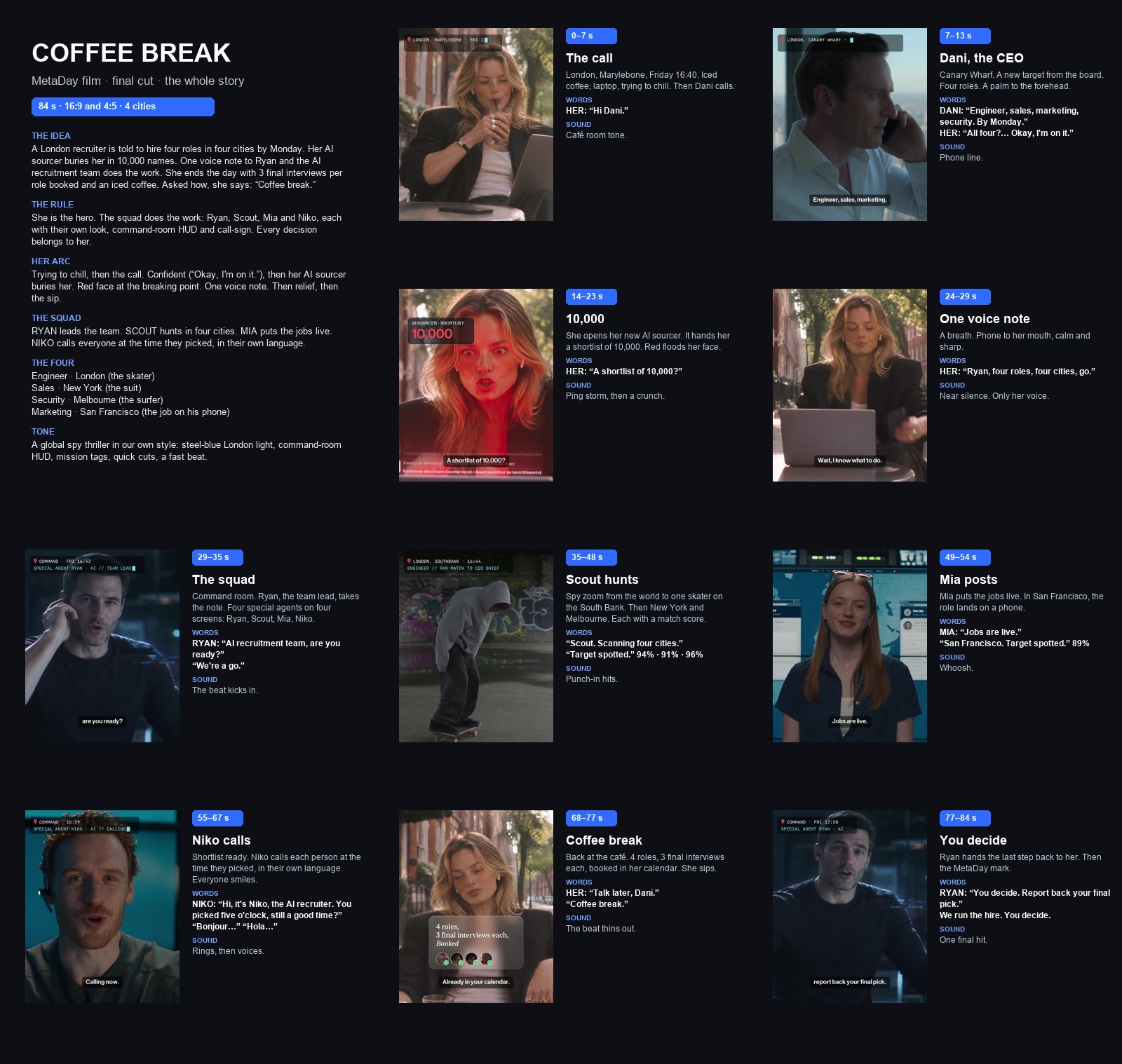
That plan kept growing in the edit. The final film runs about 90 seconds.
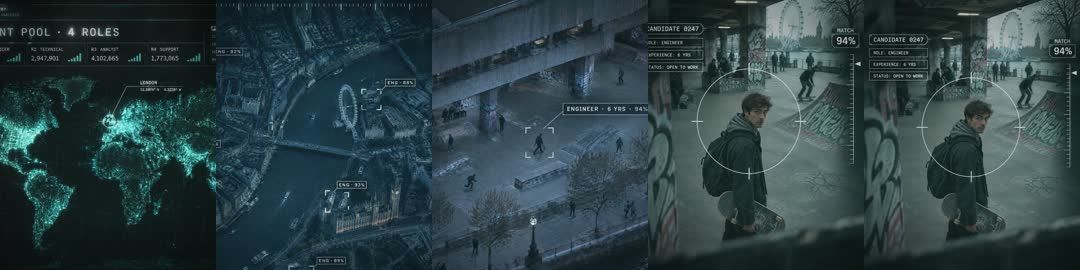
I even mapped the camera moves, like the spy zoom from the world to London to one skater on the South Bank.
Here's my story and my approved stills: [paste and attach].
Build a presentation, one page per beat: the picture, the time, the words on screen, the sound. Keep it under 90 seconds. Flag any beat that has no picture yet.
Only now did I spend. One month of Higgsfield, and clear rules:
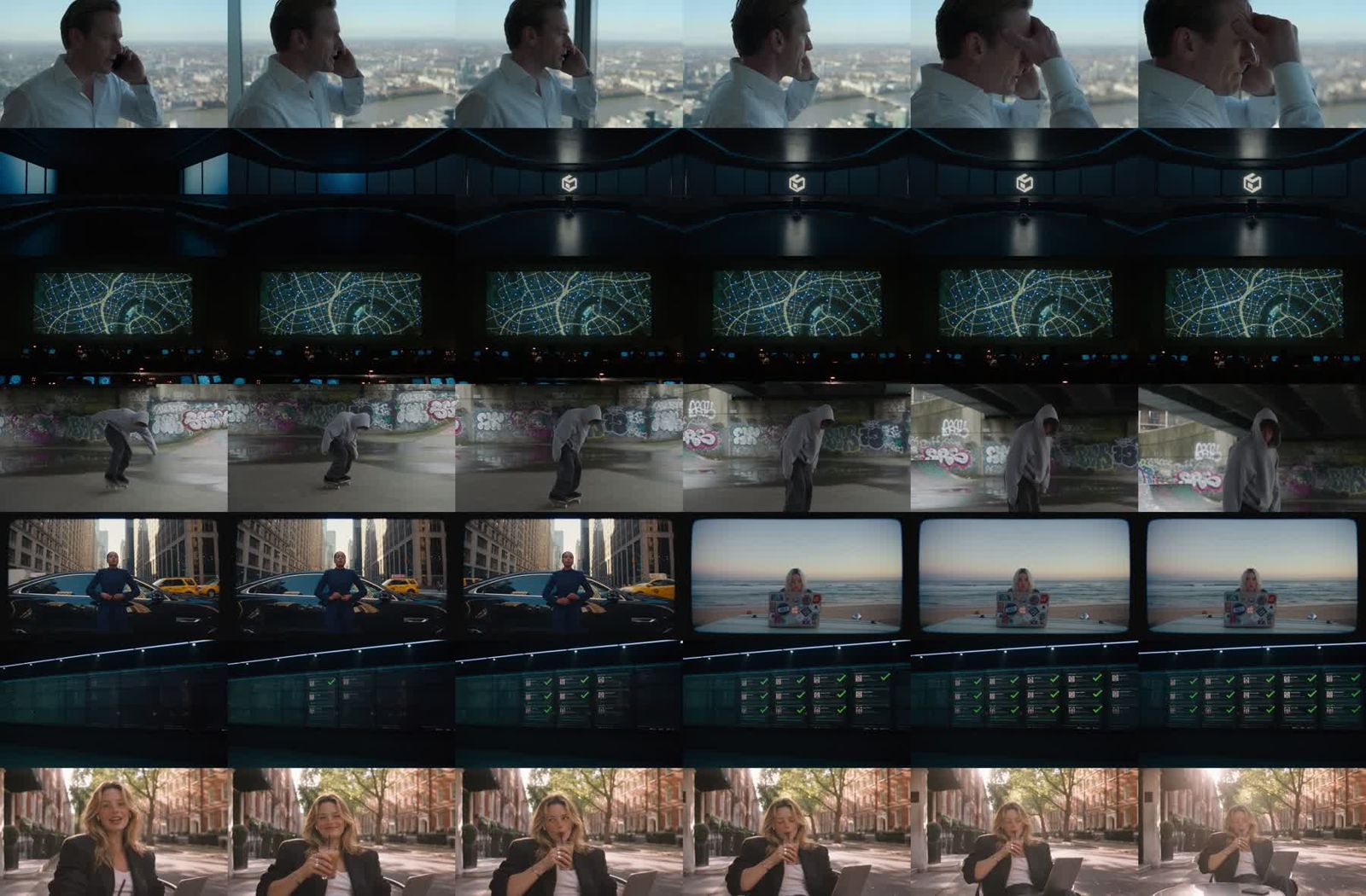
For each approved page, write one video prompt: what moves, what the camera does, who speaks and what they say, and how long. One action per clip. Start from this still: [attach]. 1080p, 16:9, sound on.
I didn't edit inside the video app. Claude Code cut the film on my Mac with code, frame by frame, while I reviewed every version. No additional editing software cost, and every change is exact.
Small glitches were fixed in the edit too, not by paying for new clips.
Here are my clips and my presentation: [folder path].
Cut the film in order with ffmpeg. Match each beat's timing. Burn in subtitles. Music only under the work scenes. Export 16:9, 4:5 and 9:16.
| What | Used for | Allocated to this film |
|---|---|---|
| Claude Max | Scripts, image prompts, presentations, the whole edit | ≈ $25 Share of a plan I already had, $200 a month |
| Higgsfield, 1 month | 3,010 credits for 1080p clips with sound, plus free images | €98 ≈ $115 Promotional first-month price. Normally €129 a month |
| ElevenLabs | Dubbing Niko's lines, about 5,300 credits | ≈ $2 Credits used, not the plan price |
| vidIQ | The music, 3 tracks | $0 Free plan |
| Total | $142, about $140 |
These figures reflect the costs allocated to this production, including promotional pricing where applicable. They do not represent the full cost of starting every subscription from scratch.
They're tool costs only. They don't include my time, about one working day, which I haven't priced. And $140 isn't a guaranteed price: your story, your retakes and current plan prices will change it.
Pick one story your customers live every day. Write it in five lines. Make the stills. Build the presentation. Only then buy credits. You'll know what the film looks like before you pay for it.
One founder made a film that used to need a production team. The AI did the execution. Every decision was mine.
The same principle runs through MetaDay. AI doesn't decide what matters. It does the work, while your team stays in control.
MetaDay is the AI recruitment team behind your one recruiter.
Interested in hiring with AI, building and innovation? Follow Roi.
Created with AI. Every person in Coffee Break is AI-generated.